
Levelling a Sloping Block with Fill: What Landowners Should Know
If your block slopes, you’ve probably wondered whether you could build it up to make it flatter and more usable. The good news is you often can, and one of the cheapest ways to do it is with clean fill — the soil, sand and gravel that contractors are constantly digging out and need somewhere to put. This guide covers the basics of levelling a sloping block in plain terms, where to get free clean fill, and how matching on ReadyFill makes it easy.
Why landowners level a sloping block
A flat, level area is just more useful. It gives you somewhere to build, park, store gear, set up a yard, or simply use the land without everything rolling downhill. Sloping ground can also collect water in the wrong spots or make access awkward. Building up the low side with fill — or filling a dip — turns an awkward block into one you can actually do something with.
You don’t always need to level the whole block flat. Sometimes you’re just raising a pad, filling a hollow, or evening out the worst of a slope. The amount of fill you need depends on how big the area is and how much you’re raising it.
The basics of building up land
At its simplest, levelling with fill means bringing in material, placing it where the ground is low, and compacting it down so it stays put. Here’s the plain-English version of how it generally goes:
- Work out the area you want to raise and roughly how high. That gives you a feel for how much fill you’ll need.
- Clear the spot of loose rubbish, grass and topsoil where needed so the fill sits on solid ground.
- Bring the fill in and spread it out in layers rather than one big heap.
- Compact each layer down before adding the next.
- Finish off the surface so it drains and sits the way you want.
For a small job you might handle the spreading yourself; for bigger jobs a contractor with the right gear makes light work of it.
Compaction, in plain terms
Compaction just means pressing the fill down firmly so it’s dense and solid rather than loose and fluffy. It matters because loose fill settles over time — it sinks, slumps and can leave you with dips, soft spots and an uneven surface months later. Compacting it as you go, in layers, stops most of that.
The basic idea is don’t dump one huge pile and call it done. Build it up in layers and firm each one down. Loose tipped fill might look level on day one and look very different after the first heavy rain. A bit of patience with compaction now saves you re-doing it later.
Where to get free clean fill
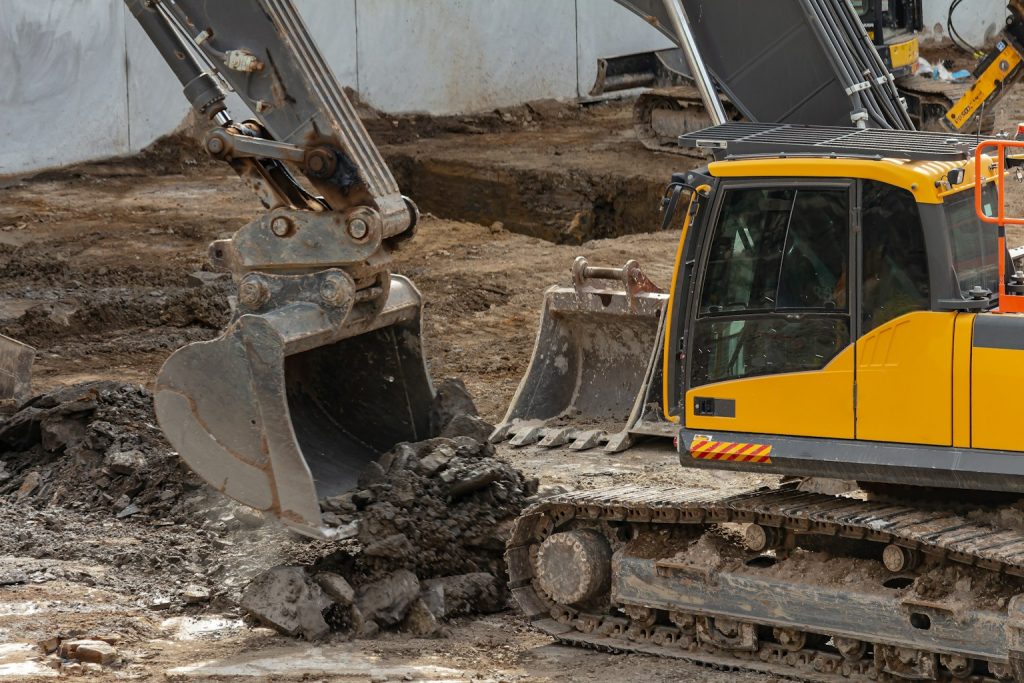
Here’s the part that makes this so worthwhile. Across the construction and earthworks world, contractors are constantly digging out clean fill — soil, sand and gravel — and they need somewhere to put it. To them it’s a cost, because dumping it somewhere far away takes time and money. To you, that same material is exactly what you need to build up your block.
When the fill moves directly from the contractor to your land, both sides win. They avoid disposal costs, you get free material delivered, and nobody’s paying a middleman to make the introduction. You should never have to pay to receive genuine clean fill, and you shouldn’t be charged for it either — the honest version of this is free on both sides.
Make sure it’s clean fill
One important note: only build up your land with genuine clean fill. That’s natural soil, sand, gravel and rock with no building waste, rubbish or contamination mixed in. Filling your block with the wrong stuff buries a problem under your feet that’s expensive to fix. Ask the contractor what the material is and where it came from, and have a look at it before it’s spread. If you can see rubble, timber or plastic, or it smells off, don’t accept it.
Getting matched on ReadyFill
The tricky bit has always been finding the right contractor with the right material near you. For years there was no proper system for this — landowners and contractors had no easy way to find each other, so the dirt went to paid dumps and middlemen profited from the gap. ReadyFill fixes that.
You list your block for free, say where you are and what you can take, and ReadyFill matches you with verified contractors nearby who have clean fill to move. It’s a streamlined, simple process, the operators are verified so you’re not dealing with strangers, and your details stay safe. From there you sort the delivery details directly — no middleman, no cut taken out of the deal.
Why now is the time
South East Queensland is heading into a big construction decade, and the build-up to the Brisbane 2032 Olympics means a lot more digging across the region. More digging means more clean fill looking for a home. Landowners who want to level or build up a block are in a great position right now — there’s plenty of material on the move, and getting listed early means you’re ready to grab it as it comes.
Got a sloping block you’d like to build up? List it free on ReadyFill, get matched with verified contractors carrying clean fill near you, and keep the whole thing direct with no middleman. Follow along at ReadyFill on Facebook.