
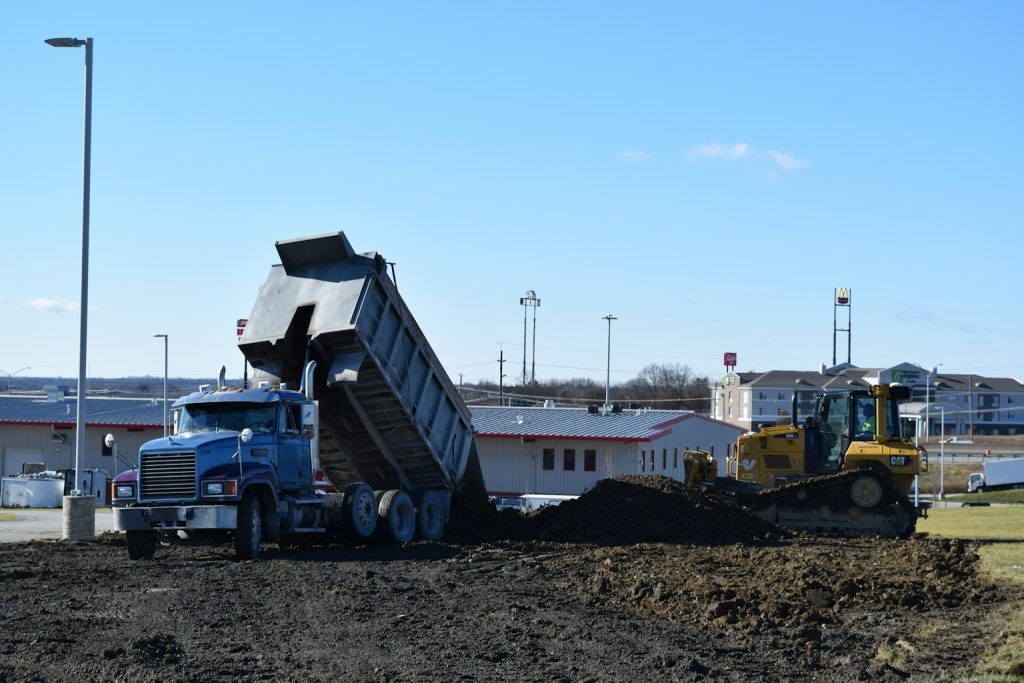
Tip Truck, Tipper or Truck and Dog: Which One Do You Need?
You need material moved. Maybe it’s a load of clean fill delivered, maybe spoil taken away from a dig. You jump online to book something and immediately hit a wall of terms: tip truck, tipper, truck and dog. Are they the same thing? Do you need to know the difference before you even ask for a quote?
Two of those terms mean the same thing, and the third is a different setup entirely. Below is what each one actually is, and how to work out which one suits your job.
Tip truck and tipper: same vehicle, different name
A tip truck and a tipper are the same piece of equipment. It’s a single truck with a tray that lifts at the front and tips the load out the back. Some parts of Australia call it a tip truck, others call it a tipper. It’s regional habit more than anything else, so don’t worry about which word to use when you’re describing your job. Either way, you’re talking about one truck, driving in, dropping its load (or picking one up), and driving out.
A tip truck on its own suits most everyday jobs, like clearing a trailer-load of green waste, delivering enough clean fill to level a garden bed, or taking away the spoil from a small excavation. It’s manoeuvrable, it can get up a standard driveway, and it doesn’t need much room to turn around.
Truck and dog: when one truck isn’t enough
A truck and dog is a tip truck with a second tipping trailer (called a “dog trailer”) towed behind it. Both the truck and the trailer tip independently, so in effect you’ve got two loads moving together on the one trip. It’s the setup operators reach for when the job involves a genuinely large volume of material and doing it in single-truck trips would mean far too many runs back and forth.
Think bulk fill deliveries for a house pad, a large cut-and-fill job, or clearing spoil from a sizeable excavation. If the job is big enough that a single tip truck would need several trips to shift it all, a truck and dog is usually the more sensible option, because it means fewer trips, less time and less disruption to the site.
The real question: volume, not vocabulary
The choice between a tip truck and a truck and dog depends on how much material you’re moving and what your site can handle. Which word sounds right doesn’t come into it. Two things decide it:
- How much material is involved. A small residential job rarely needs anything more than a single tip truck. A larger civil or construction job, or a bulk fill delivery, is where a truck and dog starts to make sense.
- What your access looks like. A truck and dog is a longer combination and needs more room to turn, reverse and park than a single tip truck does. A tight urban block, a narrow driveway, or a job with overhead wires or limited street frontage may simply not suit one, no matter how much material you’ve got to shift.
If you’re not sure how much material you’re actually dealing with, working that out first makes the rest of the decision much easier. We’ve covered how to convert between cubic metres, tonnes and truckloads in a separate guide, which is worth a read before you ask anyone for a quote.
You don’t have to get this exactly right yourself
The good news is you don’t need to become an expert in truck configurations before you can get a job done. On ReadyFill, you describe your job in plain English: what the material is, roughly how much of it there is, and what your site access looks like. From there you can see local operators who do tip truck, tipper and truck and dog work, and pick the one that looks right for your job.
When you’ve found an operator you like the look of, you choose that one business and press Request Quote. Your mobile number gets verified with a quick texted code, and then your job is texted straight to that one operator and nobody else. Nothing is charged, there are no credits involved, and your enquiry isn’t blasted out to a string of businesses hoping someone bites. You pick, they get the message, and you deal with them directly from there.
It also costs nothing to use at the moment. Describing your job and getting matched with local operators doesn’t cost you a thing right now.
The takeaway
Tip truck and tipper are the same vehicle, just different names depending on where you are. A truck and dog is a different proposition altogether: a truck plus a trailer, built for moving a lot more material in fewer trips. Which one you need comes down to how much you’re shifting and how much room your site has to work with, not which term you happened to search for.
Got a job that needs a truck? Describe it on ReadyFill’s machine and truck hire page and see local operators who can help. It costs nothing to ask. Follow ReadyFill on Facebook for more practical guides like this one.